

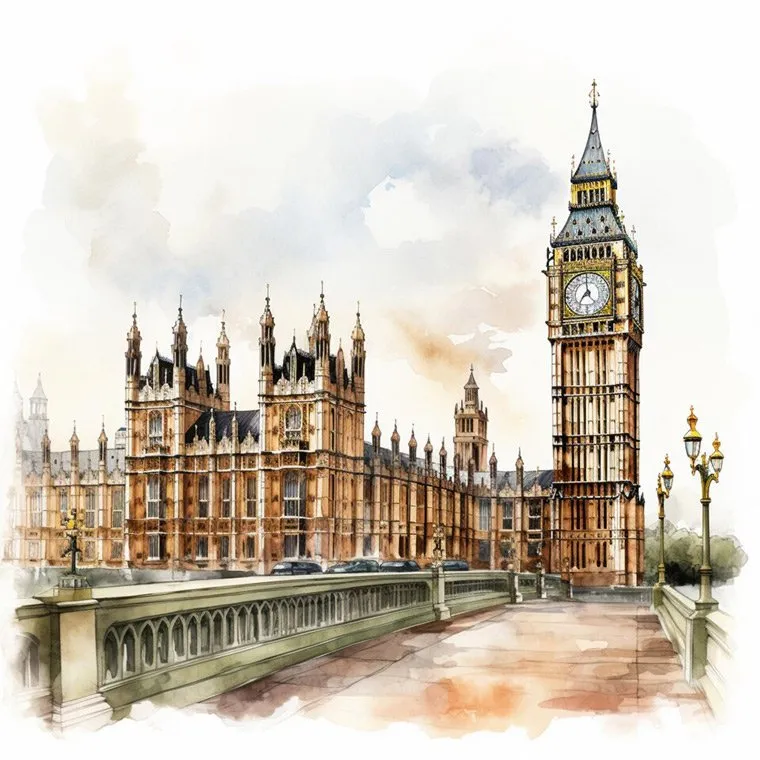

About the United Kingdom
The United Kingdom of Great Britain and Northern Ireland, commonly known as the United Kingdom (UK) or simply Britain, is a sovereign state off the north-western coast of continental Europe. It includes the island of Great Britain, the north-eastern part of the island of Ireland and many smaller islands.
Northern Ireland is the only part of the UK that shares a land border with another state, the Republic of Ireland. Apart from this border, the UK is surrounded by the Atlantic Ocean, with the North Sea to the east, the English Channel to the south and the Irish Sea to the west.
The UK is a developed country with the world’s sixth-largest economy by nominal GDP and the eighth-largest by purchasing power parity. It was the world’s first industrialised country and the foremost world power during the 19th and early 20th centuries. Today it remains a great power with considerable economic, cultural, military, scientific and political influence around the world.
The UK education system
Education in the UK is divided into four main stages: primary, secondary, further and higher education. Primary and secondary education are compulsory for children from about 5 until 16 years of age.
Most higher education begins at 18, at colleges or universities. Entry requires a standard above GCE A-level. If you have not taken A-levels, you will need to complete an additional one-year programme first; many international students take this course as preparation for university study in the UK, and it earns credits towards your degree.
Here is how UK qualifications compare with the Indian system:
| UK qualification | Indian equivalent / duration |
|---|---|
| “O” levels | SSC (Class 10) |
| “A” levels (2 years) | HSC (Class 12) |
| Bachelor’s degree | 3 years (4 years for a sandwich programme) |
| Master’s degree | 1 year |
| PhD | 3 years |
Undergraduate degrees
An undergraduate degree normally takes three years, but can take longer if it includes an industrial placement, an additional subject or a year abroad. UK degrees are specialised from Year One.
Types of undergraduate degree include:
- BSc (Bachelor of Science): a science degree
- BA (Bachelor of Arts): an arts degree
- BEng (Bachelor of Engineering): an engineering degree
- Undergraduate degree with or without Honours (e.g. BSc Hons): a three-year degree that includes extra subjects studied in greater depth, or a four-year degree that includes a year in industry for practical training
Postgraduate degrees
If you earn good grades in your undergraduate degree, you can go on to a master’s degree, which takes a minimum of one year.
Types of master’s degree include:
- MSc (Master of Science)
- MA (Master of Arts)
- MEd (Master of Education)
- LLM (Master of Laws)
- MBA (Master of Business Administration)
Entry requirements
Undergraduate
- 65% and above in Class 12 for humanities
- 70–80% and above in Class 12 or a diploma for science, commerce and engineering
- A second class may be considered by some universities if you have an additional qualification or experience. Foundation and diploma programmes are available if you have scored below 60%.
- You must have completed, or will complete, 18 years of age before joining a degree programme
Postgraduate
- 60% and above in your bachelor’s degree; a few universities may accept 55% and above
- GMAT scores of 600–700 are expected by many universities for management programmes, where required
- Many universities require at least 2–4 years of full-time work experience after your first degree for an MBA; this varies from university to university
English language
| Test | Undergraduate | Postgraduate |
|---|---|---|
| IELTS | 6.0 | 6.5 |
| TOEFL (Internet-based test) | 80 minimum | 90 minimum |
A PTE score of 60 is also accepted.
An exemption may be possible if you scored above 70% in English in Class 10 and Class 12 (English medium) and your medium of instruction has been English throughout school and college.
Intakes
The main intake at all universities is September/October. Some universities also offer a January/February intake, and a few admit students three to four times a year.
Popular universities
- University of Cambridge
- University of Oxford
- Imperial College London
- London School of Economics
- Durham University
- University of St Andrews
- University College London
- University of Warwick
- Lancaster University
- University of Bath
Education and living costs
Tuition fees
| Level | Approximate fees per year |
|---|---|
| Undergraduate (3–4 years) | £6,750 to £8,500 |
| Postgraduate (1–2 years) | £8,000 to £10,000 |
| Master’s / doctoral | £7,500 to £15,000 |
Living costs
The cost of living in the UK depends on whether you live in London or outside London, and on your own lifestyle. Living costs include accommodation, heating, lighting, food, clothing, books and daily travel for one person for one year.
Scholarships
If you have strong academics, good scores in standardised exams and extra-curricular achievements, you could be eligible for a scholarship. Many universities offer scholarships and bursaries to promising students for both undergraduate and postgraduate courses.
Student visa
To apply for a student visa, you submit your application at the nearest British High Commission or Embassy. Your application, with all the required documents and the visa fee, is accepted and passed to an Entry Clearance Officer (ECO) at the nearest visa-issuing centre of the British High Commission or Embassy for a decision.
Documents required for a UK student visa
- Visa application form (VAF1 – Non-settlement), fully completed and signed by you
- The appropriate visa fee for multiple entries
- A passport valid for at least 6 months, with blank visa pages for stamping (additional pages are not acceptable)
- Your old passport, if available
- Reference letter and a copy of the signed declaration form from the agent or recruitment organisation
- Receipt for any deposit or prepayment of tuition fees paid to the university, if applicable
- Evidence of your current studies or current employment; if neither, evidence of your current status
- A valid original acceptance letter from the UK school or college, stating:
- the course fees, with a receipt for any fees paid;
- details of your accommodation and its cost; and
- the start date and duration of the course
- All educational certificates from school onwards
- Evidence of your English language qualifications
- From your sponsors (normally parents, grandparents, brothers, sisters or relatives): a letter of sponsorship, photocopies of their passports showing their immigration status (if the sponsor lives outside your home country), evidence of their financial status, and details of available accommodation in the UK (if they are sponsoring your accommodation)
If you are going to the UK as a student for six months or less, you must ask the Entry Clearance Officer for permission to work.
 USA
USA Ireland
 Canada
 Australia
 New Zealand