



Why study in Ireland?
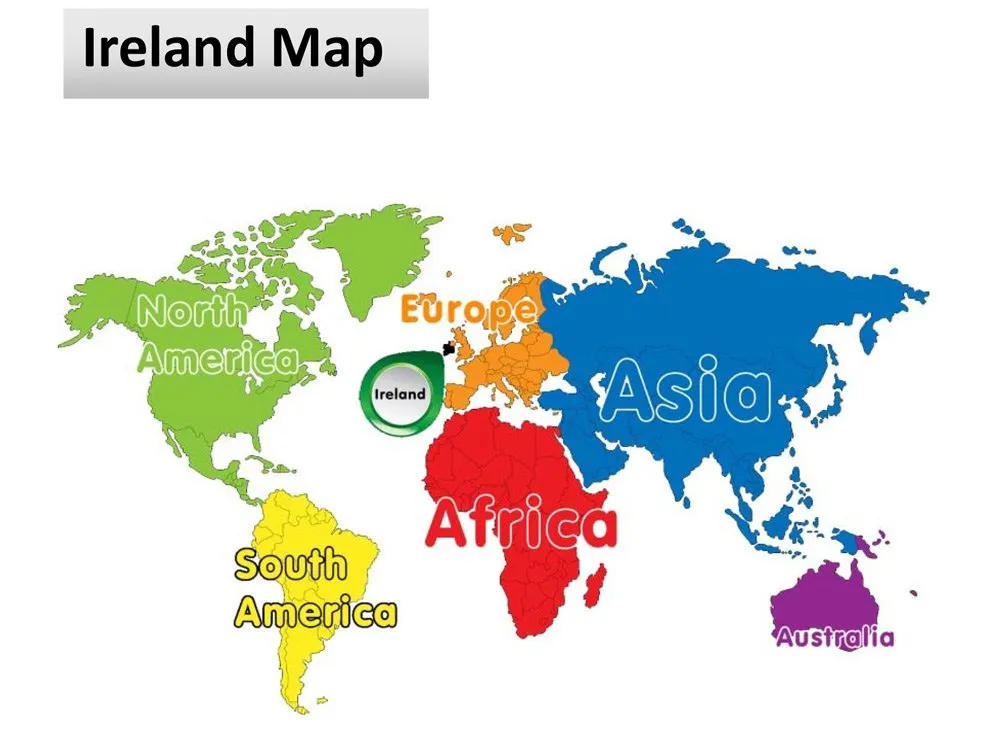
- A friendly, safe country.
- An English-speaking country.
- World-class universities.
- Low tuition fees and accommodation costs.
- Internationally recognised qualifications and an extensive choice of courses.
- The European headquarters of many IT and pharmaceutical companies.
- Master’s degrees take just 1 year.
- Post-study work visa of 2 years after a master’s degree.
- Post-study work visa of 1 year after a bachelor’s (honours) degree.
- A chance to get the right to stay indefinitely (similar to permanent residency).
Tertiary education system
Universities
There are 11 government-funded universities offering undergraduate, postgraduate and research degree programmes.
Institutes of technology
There are 14 government-funded institutes of technology. They offer a wide variety of programmes that can be academic or vocational in focus.
Colleges
These are mostly private colleges. They offer a range of programmes — professional certificates, diplomas, and undergraduate and postgraduate degrees — across a diverse range of subjects.
Our tie-up institutions
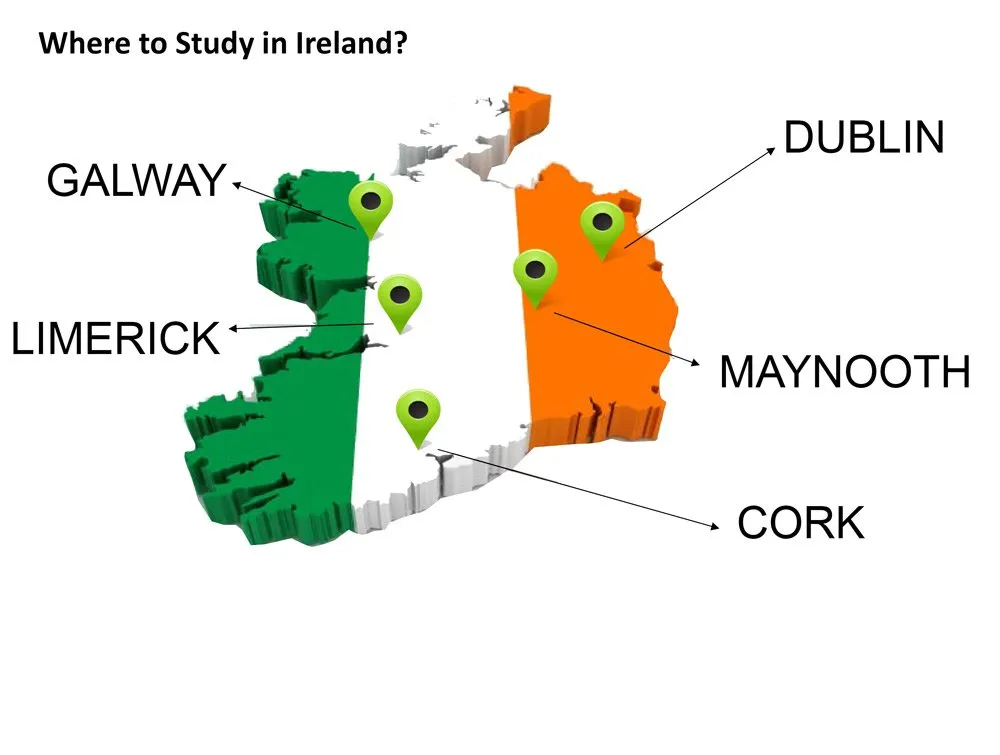
Universities
- Trinity College Dublin
- University College Dublin
- University of Galway (formerly National University of Ireland, Galway)
- University College Cork
- Dublin City University
- University of Limerick
- Maynooth University
- Technological University Dublin
- Atlantic Technological University (Letterkenny campus)
- South East Technological University (Waterford and Carlow campuses)
- Technological University of the Shannon (TUS): Midlands Midwest (Athlone and Limerick campuses)
Institutes of technology
- Dundalk Institute of Technology
Colleges
- National College of Ireland
- Shannon College of Hotel Management
- Dublin Business School
- Griffith College
- CCT College Dublin
Salient features of the universities
Trinity College Dublin
- Ranked 1st in Ireland and 101st in the world.
- A world leader in nanotechnology, immunology, engineering and information technology.
University College Dublin
- Ranked 2nd in Ireland and 177th in the world.
- Part of the National University of Ireland.
- The largest provider of graduate education in Ireland.
University of Galway (formerly NUI Galway)
- Ranked 4th in Ireland and 238th in the world.
- Popular courses: Business Analytics, Mechanical Engineering, Computer Science and Nursing.
University College Cork
- Ranked 3rd in Ireland and 286th in the world.
- Located in Cork, 2 hours from Dublin.
- Cork is known as the pharmaceutical capital of Europe.
Dublin City University
- Ranked 6th in Ireland and 439th in the world.
- Home of the Irish Centre for Cloud Computing.
University of Limerick
- Ranked 6th in Ireland and 511–520 in the world.
- Popular courses: MSc Aeronautical Engineering, MEng Mechatronics, MSc International Management and Global Business.
Maynooth University
- Ranked 10th in Ireland and 701–750 in the world.
- Located in Maynooth, half an hour from Dublin.
- Popular courses: MSc Data Science and Analytics, MSc Business Management, ME Electronic Engineering and more.
Technological University Dublin
- Ranked 8th in Ireland and 801–1000 in the world.
- Popular courses: Computing, Supply Chain Management, Sustainable Development and more.
Atlantic Technological University (Letterkenny campus)
- Letterkenny is a commercial hub of Ireland.
- Popular courses: MSc in Computing in Artificial Intelligence Research, Big Data Analytics, Culinary Arts.
South East Technological University (Waterford campus)
- Top-ranked institute of technology in the Sunday Times Good University Guide.
- An excellent reputation for internationalisation, with 5 campuses.
- Popular courses: MSc in Computing, BSc (Hons) in Pharmaceutical Science, BSc in Information Technology.
South East Technological University (Carlow campus)
- Popular courses: BE in Aerospace/Mechanical/Civil Engineering, Data Science, Supply Chain Management and more.
Dundalk Institute of Technology
- Ranked 13th in Ireland.
- Dundalk is located between Belfast and Dublin.
- Popular courses: Data Analytics, Computing in Software, Business and Technology and more.
Technological University of the Shannon: Midlands Midwest (Limerick and Athlone campuses)
- Ranked 17th in Ireland.
- Popular courses: Civil, Electrical and Electronic Engineering; Pharmaceutical and Forensic Analysis; Tourism and Hospitality and more.
Shannon College of Hotel Management
- Popular courses: Bachelor’s in International Hotel Management and Master’s in Business and Hospitality.
National College of Ireland
- NCI was ranked 14th in Ireland and “Best for Jobs” in the Sunday Times University Guide 2015.
- Major intakes: September and January.
- Popular courses: MSc Data Analytics, MSc Cloud Computing, MSc Management and more.
Dublin Business School
- Ranked 22nd in Ireland.
- Major intakes: September and January.
- Popular courses: MBA, MSc Information Systems with Computing, MSc Management.
Griffith College
- 3 campuses: Dublin, Limerick and Cork.
- Major intakes: September and January.
CCT College Dublin
- Major intakes: September and February.
- Courses: Data Analytics, International Business, Computing.
Education system
Education in Ireland has three levels: primary, secondary and higher (often called “third-level”) education. In recent years, further education has also grown enormously. Economic growth since the 1960s has driven much of the change in the education system. Education in Ireland is free at all levels, including college (university).
The Department of Education and Skills, under the Minister for Education and Skills, is in overall charge of policy, funding and direction. Other important organisations are the National Qualifications Authority of Ireland and the Higher Education Authority; at local level, the Education and Training Boards are the only comprehensive system of government organisation. Many other statutory and non-statutory bodies also play a role in the education system.
Undergraduate study
Ireland offers a vast range of bachelor’s degree programmes. Each course is carefully designed so that students build strong foundation knowledge in their chosen subjects, and each department is run by a team of competent teachers, so students can expect the best from their courses. Every university in Ireland has a vibrant, active community where you can mix with students from other countries. Bachelor’s programmes are not only about academics — universities also give students opportunities to volunteer and encourage them to take part in cultural activities.
Postgraduate study
Entry requirements for postgraduate study differ from university to university and course to course. However, most courses require an undergraduate degree in a related discipline, usually with at least a 2:2 (second-class, lower division).
Examples of postgraduate programmes:
- MSc Computer Science (Networks and Distributed Systems)
- MSc Applied Science (Software Design and Development)
- MSc Software Engineering and Database Technologies
- MSc Software Design and Development
- MEng Computer and Communications Systems
- MEng Signal Processing Engineering
- MEng Engineering Computation
- MEngSci Mechanical Engineering (Manufacturing Process and Automation Systems)
Intakes in Ireland
The main intake at universities and colleges in Ireland is September. A few institutions also offer a February start.
Entry requirements
General requirements for graduate programmes
Admission requirements for graduate programmes are set by each university. Generally, however, a first degree of at least second-class honours standard, or equivalent, is required. If you are unsure whether your qualification is equivalent to what is required, check with the qualifications recognition section of the National Qualifications Authority of Ireland.
All Irish universities require a minimum level of English that allows you to follow your studies. Universities use IELTS (International English Language Testing System) or other suitable tests to judge whether an applicant can study through English. Contact the university for full details of its admission requirements and procedures.
Applying for a master’s programme
- A relevant honours bachelor’s degree, or an equivalent degree or diploma, is mandatory.
- Some courses, such as the MBA, strictly require a certain number of years of work experience.
- Official transcripts of the subjects studied and examinations taken at undergraduate level, to prove your eligibility. Most Irish universities do not accept photocopies, so obtain official duplicate transcripts from your previous university.
- Academic references. Ask a trusted person to describe your academic achievements.
- A statement of interest setting out your proposed studies and the professional and personal goals linked to them.
- A detailed CV with relevant professional and extra-curricular experience.
- Evidence of English proficiency through TOEFL or IELTS scores.
- Courses like the MBA have special entry requirements, such as the Graduate Management Admission Test (GMAT), with a minimum qualifying score.
- A copy of your birth certificate.
Popular universities
- Trinity College Dublin, University of Dublin
- University College Dublin
- University College Cork
- Dublin City University
- University of Limerick
- National University of Ireland, Galway
- National University of Ireland, Maynooth
- Dublin Institute of Technology
- Cork Institute of Technology
- Galway-Mayo Institute of Technology
Education and living costs
Tuition fees
The cost of studying in Ireland depends largely on the university and the programme you choose. A postgraduate degree at an Irish university can cost between €8,900 and €37,000. Typical fees by subject area:
| Subject area | Tuition fees |
|---|---|
| Medicine and related | €12,035 – €37,000 |
| Engineering | €9,150 – €18,000 |
| Science and Technology | €9,150 – €18,000 |
| Arts and Humanities | €8,900 – €20,000 |
| Business | €9,150 – €18,800 |
Estimated living costs in Dublin
| Expense | Estimated cost |
|---|---|
| Rent (per week) | €127.00 |
| Utilities (per week) | €31.00 |
| Food (per week) | €46.00 |
| Public transport (per week) | €12.00 |
| Taxi (per trip) | €10.00 |
| Pub/bar (per visit) | €15.00 |
| Cinema (per visit) | €5.00 |
| Restaurant (per visit) | €20.00 |
| Mobile phone (per week) | €8.50 |
| Total | €274.50 per week |
Note: Living costs in the rest of the country are generally lower, as rent is much cheaper in Ireland’s secondary cities.
Scholarships
Government of Ireland Scholarships for Indian students are available for one-year taught master’s programmes at participating universities, including the University of Limerick, NUI Maynooth, NUI Galway, Dublin City University, University College Cork and University College Dublin (information as of June 2013).
Individual universities in Ireland also offer scholarships, and several institutes of technology offer merit-based scholarships to Indian students based on their academic percentage. For information on scholarships in Ireland, please get in touch with us.
Student visa
Documents required for an Irish student visa:
- A completed visa application form.
- Your original passport, valid for at least 6 months after your intended date of departure from Ireland, along with a full copy of every page.
- One recent passport-size photograph, not more than 6 months old. See www.embassyofireland.in for the photograph requirements — a photograph that does not meet them will delay your application.
- All previous passports, with a photocopy of every page of each. If you have ever been refused a visa for any other country, give details — preferably the original refusal letter issued by that country’s authorities. Concealing other visa refusals will result in your Irish visa application being refused.
- The visa fee, as a demand draft (DD) in favour of “Embassy of Ireland, New Delhi”. DDs can be obtained at all VFS application centres.
- An up-to-date Police Clearance Certificate, or an observation in your passport, for each applicant.
- Your acceptance letter and confirmation of fees paid (not needed for courses listed for “Approval in Principle”).
- Details of any family members living in Ireland or another EU country.
- Statement of purpose.
- A brief CV.
- Certificates of your educational qualifications.
- Evidence of an adequate level of English, such as TOEFL or IELTS (where the course is taught in English). As a guideline, Indian students applying for an Irish study visa need:
- IELTS: a minimum score of 5.
- TOEFL: a minimum score of 173.
 USA
USA UK
UK Canada
 Australia
 New Zealand